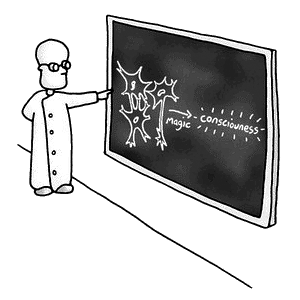
Model Theory and Art

Well so much for the science, what about Art? What, if anything, can Model Theory tell us about our appreciation of paintings, music, literature and poetry? Like consciousness, art, however we define it, has always been an integral feature of the human condition since the beginning of time and across all cultures. Like consciousness, art is rather mysterious – “ineffable” is the word often used – and is not, as far as we know, shared by any other species. Is this all coincidence, or is there some meaningful or insightful relationship between the two concepts?

Needless to say, my answer is yes! How about this: all art involves some form of modelling which is directly analogous to the modelling which goes on in our brains and is, according to Model Theory, the basis of conscious thought. OK, a bit glib maybe, but let’s drill down a bit.

Painting is probably the most straightforward example. Every painting is in some way a representation – ie a model – of some aspect of reality. Since the earliest cave drawings, humans have felt compelled to represent objects, ideas and emotions in order to communicate with, entertain or inspire other humans. Note in passing that there is an element of communicating in a way which cannot be achieved by language alone. Over the years we have developed various techniques involving perspective, lighting, colour and so on to represent not just things or landscapes but also feelings, emotions and religious experiences. More recently with movements such as abstract expressionism or post modernism the representational aspect of visual arts is more subtle with an increasing self-referential element – a fascination with the modelling process itself and the medium or substrate underlying the model.

Cezanne Painting

Music is about modelling in this more subtle form. I would claim that all music reflects in some sense the process of the mental model running in our brains, in the same way that a program runs on a computer. An important aspect of consciousness is the time dimension. Our self-model, and indeed our model of the universe including ourselves, is not a static representation but a continuous, coherent and dynamic simulation which extends from the past, through the present, and into the future. Like a computer program it “runs”, constantly looping back into the past to access memories or looping into the future to perform “what-if” subroutines, remembering, planning, reflecting, anticipating, always in the context of appropriate emotions and drives – the affective and conative aspects of experience. Music reflects this process, using a sequence of notes extending through time and devices such as pitch, tonality, rhythm, repetition, to “tell a story” or “paint a picture” or otherwise communicate in a specifically musical way some aspects of a person’s conscious experience to another conscious being.
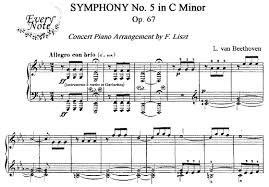
Beethoven's 5th

Literature, and storytelling in general, is all about language and narrative, which as we noted in an early blog, are absolutely congruent with Model Theory. We can regard language as reflecting the model’s logic, and narrative as a direct representation of the model in action, telling a story about a particular situation in a particular world with particular characters which unfolds through time. This, I suggest, is directly analogous to the process by which we make sense of and interact with the world, through remembering what’s happened, anticipating what might happen, drawing conclusions, learning, regretting, hoping, once again with a background of appropriate emotions and feelings. Interestingly, if we are engrossed in a really good book – a “rattling good yarn” – we “lose ourselves” and become “immersed” in the story. What’s happening here, I suggest, is that our mental model is being driven entirely by the story – we largely lose consciousness of the “real” world and indeed of ourselves.

War and Peace

Poetry introduces the important notion of metaphor. For a masterful discussion of the role of metaphor in poetry I’d recommend William Empson’s classic, “Seven Types of Ambiguity”. If I remember correctly, he describes the haunting phrase in Shakespeare’s sonnet on old age “bare ruin’d choirs, where late the sweet birds sang” as being a metaphor for trees in autumn, which is itself a metaphor for old age, which is also suggested by ruined buildings, which hints at the dissolution of the monasteries, which happened “lately” in Shakespeare’s time, with a pun/metaphor on “late” as in the evening when the birds/choirboys sang in the evening, which brings us back to old age again. In other words, the phrase appeals to us because it uses metaphors to trigger several related but slightly different meanings which add up to a very rich, complex and emotionally satisfying communication. But what is a metaphor, ultimately, but a model – a process of expressing something in terms of something else. As such metaphor is central to language and the way we think, communicate and understand the world, as has long been recognised by psychologists and philosophers. More specifically, metaphor is absolutely central to Model Theory. Not only can our mental model itself be regarded as one gigantic metaphor for the world, but within the model, metaphor is clearly a pervasive and powerful tool for modelling cognitive phenomena, particularly more complex concepts and experiences.

Sonnet 73

So, representation, process, narrative and metaphor: all key components of works of art (without a capital A) to a greater or lesser extent, alone or in combination. And all central to Model Theory. Not exactly a proof, I’ll admit, but perhaps a smoking gun?

On LSD (don’t try this at home!)

Like many of my generation, I “experimented with drugs” in my youth. The most interesting was LSD. The extraordinary and sometimes scary effects of this drug are still vivid in my memory today and I believe they are explicable in terms of Model Theory.

The most obvious effect of LSD is on sensory perception, particularly visual effects. The visual world swirls about, with intense colouring and shading and a wealth of vibrant details. We can explain this in terms of a lack of the filtering of sensory input which occurs normally in visual perception, as well as a breakdown in the “constancies” which keep the visual world stable – for example the corollary discharge mechanism described in an earlier blog. In other words what we see is closer to the “real” sensory input than the idealised model of a visual scene which our brains normally construct for us. Normally if we look at a blank white wall we see just that – a wall painted white. Under the influence of LSD we see what is really there – every brushstroke, considerable variation in the shade of white from place to place, coloured shadows, and so on. Conversely, the wall is not static and stable as we know it to be in reality, but writhes about and changes shape as the various feedback and feedforward mechanisms which normally maintain visual stability begin to break down and reflect the shifting patterns presented to our retinas.

LSD also has a powerful effect on attention and engenders “heightened awareness”. You find yourself spending what seems like hours fixated on a flower or a blade of grass, marveling at its significance and beauty. As we have seen, in terms of Model Theory, attention is the mechanism which we use to test out hypotheses about the outside world and our place in it. LSD’s effect is not so much on attention itself, which if anything is intensified, but more on our ability to shift attention.

The distortion of sensory perception together with attentional effects, heightened awareness and indeed heightened emotions often combine to give a sense of “oneness with the universe”, sometimes tellingly referred to as “ego-death”. This immediately suggests a breakdown not just of the mental model in general, but also specifically of the self-model which we have argued is the basis of our sense of self-consciousness. In a sense we are bypassing the mental model and experiencing the world more directly – what Metzinger would call a breakdown in the “Transparent” nature of consciousness. The effect is (I imagine) very similar to a religious experience, something else which Model Theory can potentially address.

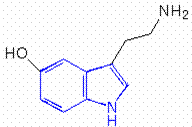
It appears that LSD works by interfering with the effect of the neurotransmitter serotonin or 5-hydroxytryptamine. This makes sense when you compare molecular structures.
image004 lsdimage002 serotonin


LSD Molecule                                  Serotonin Molecule


That leads to the prediction that serotonin plays an important role in the functioning of the mental model. For example based on the effects described above, we would expect it to be active within visual cortex (visual distortions) and pre-frontal cortex (attention and self-consciousness). Assuming serotonin has a predominantly inhibitory effect, LSD would act primarily by inhibiting this inhibition – a general excitatory effect.

One other striking effect of LSD is that time seems to slow down. I’m not sure how that fits in with model theory. In one sense, this maybe just reflects that so much goes on while the drug has its effects that a “trip” of eight hours or so seems to last for days, in retrospect at least. But maybe there is an explanation in terms of the running of the model. Computers all have a “clock” which keeps the steps in a program in synch – the faster the clock, the more powerful the computer. Maybe the mental model has a similar clock, intimately involved with our perception of time. More on this in later blogs perhaps.

More Research and a Recap on the “Easy Problems”

Returning to this blog after a gap of over two years, I thought I’d do some more research on what others have to say about consciousness.  There’s a lot of stuff out there!  But I find it all a bit dispiriting.  On the one hand there’s a lot of philosophers arguing about rather obscure distinctions between a huge range of “isms”; on the other hand there’s a lot of neuroscientists with theories about the brain processes underlying consciousness, which are more or less plausible but which don’t really throw much light on what I’ve learnt to call the “hard problem” of consciousness.

Which brings me on to David Chalmers, to my mind the most lucid writer on the subject (see, for example “Facing up to the Problem of Consciousness”, 1995).  Chalmers makes a distinction between “easy” and “hard” problems.

david_chalmers

“Studying consciousness tells us more about how the world is fundamentally strange.  I think we have a few more revolutions to go yet before we get to the bottom of it”.  David Chalmers.

“Easy” problems (the term is a relative one!) relate to the brain processes underlying consciousness.  The “hard” problem is explaining how such processes result in the subjective experience of consciousness – the immediacy of qualia, the felt quality of emotions, my access to a stream of thoughts, the “what it is like to be me”.  Chalmers points out, and I agree with him, that whilst several of the neuroscience theories referred to above provide valuable insights into the potential neural correlates of consciousness, they do not address the hard problem.

Chalmers would no doubt level the same criticism at my Model Theory!  I plan to tackle the hard problem in my next blog.  But first let’s recap what Model Theory has to say about the easy problems.

OK, so like more or less everyone else, as far as I’m aware, I start from the assumption that consciousness is correlated with brain activity – neurons firing in a coordinated fashion.  For Model Theory much of this neuronal activity reflects the running of a model of the known universe, just like a sophisticated computer simulation.  Importantly, the model includes a model of the self.   Consciousness is regarded as an emergent property of recursive interactions between the model as a whole and the subset which is the model of the self – more on this in the next blog.

To reiterate previous blogs, it seems to me that this simple theory fits well with much of what we already know about the brain, the mind and the human condition.

  • The key assumption of a self-model within an overall model fits well with the experience of self-consciousness (as mentioned previously, I think Metzinger provides the best account of this – and I’ve now read his excellent book “The Ego Tunnel” – but he doesn’t really crack the hard problem!).
  • Everything we know about sensory perception fits; what we perceive is the model, not the outside (or inside) world directly.
  • Selective attention and our interactions with the outside world can be understood to be largely driven by a process of “testing hypotheses” against the model via a kind of “generalised corollary discharge” mechanism, as described earlier.
  • There is also a natural fit between modelling and testing out future scenarios to help with planning and thinking. Similar processes would underpin re-running events in the past.
  • I’m less interested in the actual neural correlates of how the model works but presumably it’s directly analogous to a highly sophisticated computer simulation, although massively parallel rather than serial. So there would need to be overall coordination of the firing of related neurons and neuron clusters all over the brain, and access to the current states of the model for motor responses and reporting purposes.  Tonini’s Integrated Information theory, Baars’ Global Workplace theory, and Crick & Koch’s idea of synchronised neuronal oscillations are probably all along the right lines.  I also have a hunch that the frontal lobes are key to consciousness and I like the various theories which posit recursive loops between the cortex and the thalamus (eg Llinas, Ward, Sporns etc).  See Anil Seth for summaries of all these theories.
  • Apropos of this, my feeling is that the raw firing of neurons is routinely processed and abstracted into “information” and higher order information such as symbols, and that the model is best thought of in terms of processing of this information rather than as a biological process as such.
  • On top of all this, as explained in previous blogs, I believe Model Theory to be consistent with several other aspects of human experience including dreams, language, the arts and the effects of hallucinogenic drugs.

So I’m fairly comfortable that Model Theory is a good way of describing “how the mind works” and as such is at least consistent with what we know about consciousness.  But I have to admit it doesn’t really solve the “hard” problem … yet! – see next blog!

hard-problem-by-jolyon-troscianko

The Hard Problem

I promised in the last blog to explain how Model Theory addresses Chalmers’ “hard problem”.  Well here we go…

Consciousness, it seems to me, is simply information organised in such a way that it observes itself.

I’m proposing that the way the mind works is in terms of a model or simulation of the known universe which includes a model of the self.  The challenge is to explain how the running of this model results in conscious experience.  My answer is that the mind model, just like any complex simulation, generates a huge amount of information.  This information is available to the sub-model of the self which uses selective attention to observe the model in action, including the sub-model itself.  The result is conscious experience.  How could it be otherwise?

Still not convinced?  OK, a little more about information.  Chalmers, as I understand him, more or less accepts that consciousness is an emergent property of information processing in the form of brain activity, but because he sees no acceptable reductive explanation of how this activity actually results in conscious experience he comes to the conclusion that consciousness is another “fundamental” property of the universe like matter, space or time (all of which are ultimately just as mysterious as consciousness!)  Interestingly, he then goes on to speculate that information is an important part of consciousness, but he makes a distinction between two aspects of information: the physical and the phenomenal.  Well as far as I’m concerned they’re the same.  Both the information in the mental model and the information available to us when we’re conscious is the same old information, which as an entity is reasonably well understood – we don’t need anything else in the form of a new fundamental property.

Admittedly, information is a rather slippery concept.  We can’t touch or feel it and in order to exist it needs to be encoded in some sort of substrate then accessed by some sort of information processing system.  Within a computer simulation the information is encoded in hardware and accessed by sub-systems implemented in software routines.  Within a mind the information is encoded in patterns of neuronal activity and accessed by other neuronal structures.  Of course we don’t have direct access to the information encoded at the lowest level of neurons firing.  The information is abstracted and aggregated into an enormously rich structure of symbols, concepts, algorithms and the like.  But this is true of information whatever its substrate.  The information in a book is abstracted into letters, sentences, descriptions, metaphors, analogies and narratives.  The information in a computer simulation is ultimately ones and zeroes – bits – but is manipulated, accessed and reported in the form of a range of complex data structures – numbers, characters, formulae, matrices, sets, images and so on, which are related in some way to the physical process being modelled.  I take it that the same sort of rich symbolic information processing underlies conscious experience.

Take any movie.  We know that it can be encoded entirely digitally.  In other words the movie is nothing more nor less than pure information encoded as a huge string of ones and zeroes.  This information is then re-encoded into patterns of pixels and sound waves and fed into our brains via our eyes, ears and sensory processing parts of the brain where it is experienced as being more or less identical to a narrative unfolding in the real world.  Now the information must have been re-encoded into the substrate of our mental model but it is still just the same information.  The only thing which has been added is our knowledge, partly innate, partly built up from experience, of how the physical world works – spatial structures, causal relationships, language and so on, which is presumably just more information, certainly in terms of Model Theory.  Note in particular that “qualia” within the movie – the redness of a rose, the sound of a gunshot – have also been encoded entirely digitally in the original movie, and that same information is presumably encoded within the mind, so I stand by my claim in an earlier blog that qualia too are in this sense “just” information.

OK, so the hypothesis is that consciousness is just information.  It’s not physical “stuff” but neither is it some mysterious ineffable quality.  There is a distinction between mind and matter but we don’t need to postulate some new sort of dualism.  The distinction is exactly the same in principle as that between the hardware and software on a computer or the narrative of a novel and the paper it’s printed on.  And there’s absolutely no problem about mind and matter interacting with each other.  The physical world impinges on us via sensory data which is experienced as information within a mental model.  And the information within our mental model can be used to fire motorneurons which send signals to our muscles which can impact the physical world.

At this point Chalmers would probably say that’s all very well but you still haven’t cracked the hard problem because just having the information in our heads isn’t enough; there’s a missing ingredient; you need something or someone to observe the information in order for it to become conscious experience.  Otherwise we might just as well be “zombies” as he puts it.

Well I propose that the missing ingredient is the recursive relationship between the model of the self and the overall mental model which contains the model of the self.  This is where our old friend J W Dunne comes in, as discussed in an earlier blog.  Recall that Dunne regards explanations in terms of an infinite regress as perfectly respectable and makes the point that we can only really understand systems which feature an infinite regress (of which there are many examples) when we examine the second term and its relationship with the first and third terms.  In the case of Model Theory I take this as meaning that the self model observes the model as a whole and is in its turn observed by a higher order model and so on.  Or more generally, the mental model both observes and is observed by itself.  I find it inconceivable that something like this could be going on without a “me” being conscious of it.

Another way of looking at this is in terms of the ancient and much derided idea of a homunculus or “little man” sitting inside our heads.  As explained in the earlier blog, I’m not sure this analogy is quite as outlandish as it’s usually painted and at least it has the virtue of feeling plausible in a common sense sort of way.  There is also some similarity between what I’m proposing and the ideas of Douglas Hofstadter and his “strange loops”.  Hofstadter wrote the celebrated book “Godel, Escher, Bach” and followed this up with “I am a Strange Loop”.  I think, like me, he’s claiming that the essence of consciousness is some kind of recursive or paradoxical feedback loop between different symbolic processing levels of the mind.  Unfortunately I find his writing almost completely impenetrable.  And like Metzinger and Dennet he concludes that the self is an illusion.  I simply don’t buy that.

So there you have it, for the time being!  My proposition is that I’m an information processing system and that my conscious experience is of information which is aware of itself.  Anyone out there like to comment?

Information, quantum theory, entropy and other weird stuff

In the last blog I claimed that consciousness is an emergent property of a complex information system and that conscious experience is caused by our mental model observing itself recursively.  To Chalmers’ question what is it like to be conscious I’d have to answer, well, actually, it’s like having a little man in my head observing everything going on in there!

So have we solved the Hard Problem?  I’m not sure.  I suspect Chalmers would say no.  But I think we’re on the right track.  And like Chalmers, I have a hunch that the concept of Information is key to the problem.  Perhaps instead of information we should talk instead of “knowledge” to capture the idea of something which belongs to someone and is persistent over time and grows.  Consciousness could then be summarised as “knowledge which is aware of itself”.

In this blog I’m going to start exploring how the Model Theory of what happens inside our head relates to what modern physics tells us about what happens in the physical world outside our head.  In this respect, as part of a lifelong attempt to understand quantum mechanics, relativity and so on, I’ve been reading an excellent book by Carlo Rovelli entitled “Reality is not what it seems – the journey to quantum gravity”.  I still don’t understand it!  But I’ve learned some fascinating new things.

511pe5fjy8l-_sx311_bo1204203200_

If, as I claim, consciousness is “just” information, albeit information configured in a highly complex and specific manner, then it’s tempting to speculate that perhaps everything else in the universe – matter, energy, space, time – is “just” information too.  Well it turns out that this is not a new idea.  A very eminent physicist called John Wheeler came up with the concept of “It from Bit” many years ago.  To quote: “It from Bit symbolises the idea that every item of the physical world has at bottom — at a very deep bottom, in most instances — an immaterial source and explanation; that what we call reality arises in the last analysis from the posing of yes-no questions and the registering of equipment-evoked responses; in short, that all things physical are information-theoretic in origin and this is a participatory universe.”

What this refers to, I think, is something which I’ve never really been able to get my head around – all that business about Schrodinger’s cat and how you can’t say anything definitive about the position or velocity of an elementary particle until it’s been observed (ultimately by a human being, presumably).  Similarly, Einstein’s relativity seems to be about observers constrained by the speed of light which has an absolute and, to me, arbitrary value of 186,000 mph.  It gets worse!  I now learn from Rovelli that at the quantum level neither space nor time really exist!  All there is are “events” when elementary particles interact with each other and come into existence.  All very weird, but what’s exciting for me is that Rovelli seems to be saying that information is at the heart of it all.  For example: “In fact, the entire structure of quantum mechanics can be read and understood in terms of information, as follows.  A physical system manifests itself only by interacting with another. … Any description of a system is therefore always a description of the information which a system has about another system.”  Also: “Many scientists suspect today that the concept of “information” may turn out to be a key for new advances in physics.  …  I believe there is something important in this idea.”  But he’s kind enough to add in his chapter on information: “If this chapter seems particularly opaque, it’s not because your ideas are confused.  It’s because the one with the confused ideas is me.”  Phew!

The concept of information is also central to thermodynamics.  Recall that the Third Law of Thermodynamics states that Entropy, broadly conceived as the inverse of information, always increases.  Except in highly organised local systems such as living organisms or the human mind where entropy is reduced (and information, or knowledge, is increased) by effectively “feeding” on energy from the outside world.  Rovelli points out that the only way we perceive the passage of time at the macro level (remember that at the micro level it doesn’t exist) is through the evidence of entropy-increasing processes, like breaking glass, or decaying matter.  Is there a connection between the central importance of time to our conscious experience and the notion of the mind as an entropy-reducing, knowledge-creating information system?

To be continued …