Consciousnessandstuff – ideas about mind and matter
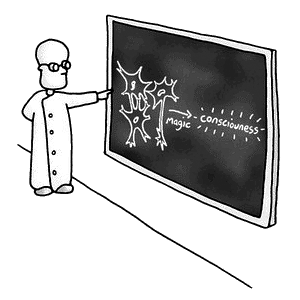
In a previous life I was an academic physiological psychologist (I completed a PhD on the Frontal Eyefields, for my sins!) and I’ve always been fascinated by what has come to be known as the “hard problem of consciousness”. How do physical processes in the brain give rise to subjective experience? What is the relation between the subjective, highly personal, internal world of the mind and the objective, physical, external universe? Are they composed of the same “stuff” and what is its nature? Will machines ever be able to think or be conscious in some way?
I started this blog in about 2010 as a place to record my occasional musings on the subject and over the years I’ve developed what I refer to in shorthand as “the Model Theory of Consciousness”. This is an unsatisfactory label, not least because it begs the question how do we define “consciousness” not to mention “theory” or indeed “model”, but I’m stuck with it for now!
The main part of this blog is about the Model Theory which I would summarise, again somewhat clumsily for the time being, as:
A theory of mind and consciousness as a massively complex information processing model of reality which includes a model of itself.
The theory features a number of core ideas of which the most important are probably:
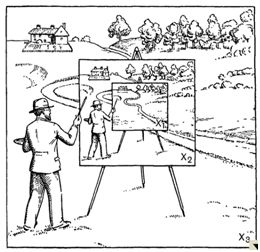
- Model within a model: There is a gradual realisation within neuroscience that we, and indeed all forms of life with a brain, interact with our environments primarily via models encoded within neural networks. The old stimulus-response interpretations of perception and behaviour are largely defunct. It is much more helpful to recognise that we interact with reality via a gigantic model, rather like a simulation in a computer, which via huge memory resources and attentional mechanisms, reconstructs the outside world and tests its reconstruction by sampling a tiny fraction of the stream of information entering our eyes and other sense organs. By the same token, we are able to simulate possible future actions and replay past experiences “offline” using the same model, an important part of language and thought (and dreaming). A crucial insight of this blog is that this model includes a model of the self, which interacts with a model of the outside world and with models of other people, objects, concepts and symbols. The running of this self-model is expressed as subjective experience and consciousness. We may even postulate that this conscious process operates primarily within a short-term memory or workspace controlled by the hippocampus (analogous to RAM in a computer) and interacting with longer-term memory distributed primarily within the cerebral cortex (analogous to secondary storage in a computer such as disc space or tapes) and controlled by an attentional mechanism located mainly in the frontal lobes (loosely analogous to an Operating System in a computer). Models are now a key part of current AI theory, as I understand it (my understanding is strictly limited!) but in conjunction with algorithmic or RL (“Reinforcement Learning”) mechanisms. To summarise, Model Theory envisages a “whole universe” mind-model “running” in our brain and featuring a recursive relationship with a sub-model of the self which itself interacts with other sub-models, expressed as a self-aware subjective narrative about the internal and external world.
- Complexity and emergent evolution: This is the important idea, which originated with Cybernetics or Complexity Theory, that if a system is sufficiently large and sufficiently complex then it becomes self-organising so that new and surprising properties and behaviours emerge, usually beneficial for the system as a whole, which are difficult to predict from the information exchanges of the lowest level system elements (neurones in the case of a brain; chips in the case of computers). The best example of this is Adam Smith’s Invisible Hand, arguably one of the most underrated achievements of the early Enlightenment, even though exactly how it works has never been explained in detail. In the same way we can envisage how neurones might interact within the brain resulting in higher level functions such as thought, intelligence and consciousness, without needing to understand exactly how this works. In fact, it may be that the human brain (86 billion neurons and roughly 100 trillion compared with 1 quadrillion synapses – compared with 200 billion transistors in the most powerful chip) is simply too complex to be able to understand itself in detail (it may require an AI system in the future), though this shouldn’t stop us from having a good idea of how it does what it does. Similarly, the ideas in this blog can be extended to other highly complex human systems such as economies or societies.
- Information as a fundamental building block: Information, or perhaps more properly information processing, is regarded as the fundamental “stuff” of which mind is composed, analogous to the software and data in a giant computer simulation. The models in one case are running on a network of neurons and in the other on computer hardware. This idea is extended through the “its from bits” formulation (originated by Wheeler and backed up, I think (!) by Quantum Mechanics) which postulates that all matter is, at a deep level, “just” information. This can then be extended further into the idea of the evolution of the universe since the big bang, starting with “0=1-1” – the idea that out of nothing a “something” and an “anti-something” emerges, then, progressively, mathematics, elementary particles, the physical universe, biological life (most crucially), then consciousness and ultimately what might be conceived, metaphorically, as the “Mind of God”!
Subsequent posts in this section of the blog are arranged in an oldest-first order and feature many other ideas or strands of thought derived from many different sources and disciplines such as philosophy (particularly phenomenology), computer science, neuroscience, thermodynamics, quantum mechanics, ontology and many more. To read about these ideas you’ll just have to plough through the rest of the blog starting with the very first post immediately below, where long ago I set out broad objectives and beliefs for the blog. You may also be interested in the About section, which as well as setting out my approach to the blog (About the Blog) also charts my chequered career (About Me) and how that exposed me to many of these influences. Few of these ideas are my own but hopefully I’ve combined them in a novel way to address the particular conundrum of consciousness and in the process developed an interesting new perspective on many other complex human issues in what I’ve come to regard as a paradigm shift exemplified by the current intense interest in recent advances in Artificial Intelligence (AI).
Finally, the Other Stuff section of the blog is a sort of online scrapbook where I document other ideas, observations and random thoughts, many of which have turned out to be applicable to Model Theory and have found their way into the main blog.
Enjoy! 😊







![{\displaystyle i\hbar {\frac {\partial }{\partial t}}\Psi (\mathbf {r} ,t)=\left[{\frac {-\hbar ^{2}}{2m}}\nabla ^{2}+V(\mathbf {r} ,t)\right]\Psi (\mathbf {r} ,t)}](https://wikimedia.org/api/rest_v1/media/math/render/svg/4894f9a205c471cb012351a1fccdd01285b6f11c)