Returning to this blog after a gap of over two years, I thought I’d do some more research on what others have to say about consciousness. There’s a lot of stuff out there! But I find it all a bit dispiriting. On the one hand there’s a lot of philosophers arguing about rather obscure distinctions between a huge range of “isms”; on the other hand there’s a lot of neuroscientists with theories about the brain processes underlying consciousness, which are more or less plausible but which don’t really throw much light on what I’ve learnt to call the “hard problem” of consciousness.
Which brings me on to David Chalmers, to my mind the most lucid writer on the subject (see, for example “Facing up to the Problem of Consciousness”, 1995). Chalmers makes a distinction between “easy” and “hard” problems.
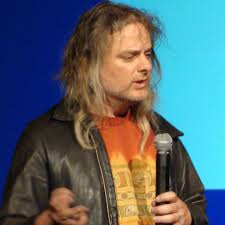
“Studying consciousness tells us more about how the world is fundamentally strange. I think we have a few more revolutions to go yet before we get to the bottom of it”. David Chalmers.
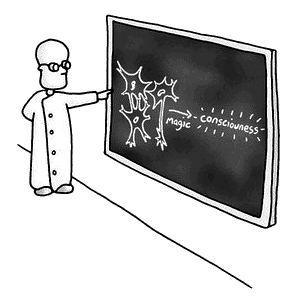
“Easy” problems (the term is a relative one!) relate to the brain processes underlying consciousness. The “hard” problem is explaining how such processes result in the subjective experience of consciousness – the immediacy of qualia, the felt quality of emotions, my access to a stream of thoughts, the “what it is like to be me”. Chalmers points out, and I agree with him, that whilst several of the neuroscience theories referred to above provide valuable insights into the potential neural correlates of consciousness, they do not address the hard problem.
Chalmers would no doubt level the same criticism at my Model Theory! I plan to tackle the hard problem in my next blog. But first let’s recap what Model Theory has to say about the easy problems.
OK, so like more or less everyone else, as far as I’m aware, I start from the assumption that consciousness is correlated with brain activity – neurons firing in a coordinated fashion. For Model Theory much of this neuronal activity reflects the running of a model of the known universe, just like a sophisticated computer simulation. Importantly, the model includes a model of the self. Consciousness is regarded as an emergent property of recursive interactions between the model as a whole and the subset which is the model of the self – more on this in the next blog.
To reiterate previous blogs, it seems to me that this simple theory fits well with much of what we already know about the brain, the mind and the human condition.
- The key assumption of a self-model within an overall model fits well with the experience of self-consciousness (as mentioned previously, I think Metzinger provides the best account of this – and I’ve now read his excellent book “The Ego Tunnel” – but he doesn’t really crack the hard problem!).
- Everything we know about sensory perception fits; what we perceive is the model, not the outside (or inside) world directly.
- Selective attention and our interactions with the outside world can be understood to be largely driven by a process of “testing hypotheses” against the model via a kind of “generalised corollary discharge” mechanism, as described earlier.
- There is also a natural fit between modelling and testing out future scenarios to help with planning and thinking. Similar processes would underpin re-running events in the past.
- I’m less interested in the actual neural correlates of how the model works but presumably it’s directly analogous to a highly sophisticated computer simulation, although massively parallel rather than serial. So there would need to be overall coordination of the firing of related neurons and neuron clusters all over the brain, and access to the current states of the model for motor responses and reporting purposes. Tonini’s Integrated Information theory, Baars’ Global Workplace theory, and Crick & Koch’s idea of synchronised neuronal oscillations are probably all along the right lines. I also have a hunch that the frontal lobes are key to consciousness and I like the various theories which posit recursive loops between the cortex and the thalamus (eg Llinas, Ward, Sporns etc). See Anil Seth for summaries of all these theories.
- Apropos of this, my feeling is that the raw firing of neurons is routinely processed and abstracted into “information” and higher order information such as symbols, and that the model is best thought of in terms of processing of this information rather than as a biological process as such.
- On top of all this, as explained in previous blogs, I believe Model Theory to be consistent with several other aspects of human experience including dreams, language, the arts and the effects of hallucinogenic drugs.
So I’m fairly comfortable that Model Theory is a good way of describing “how the mind works” and as such is at least consistent with what we know about consciousness. But I have to admit it doesn’t really solve the “hard” problem … yet! – see next blog!
 consciousnessandstuff
1 comment