Well so much for the science, what about Art? What, if anything, can Model Theory tell us about our appreciation of paintings, music, literature and poetry? Like consciousness, art, however we define it, has always been an integral feature of the human condition since the beginning of time and across all cultures. Like consciousness, art is rather mysterious – “ineffable” is the word often used – and is not, as far as we know, shared by any other species. Is this all coincidence, or is there some meaningful or insightful relationship between the two concepts?
Needless to say, my answer is yes! How about this: all art involves some form of modelling which is directly analogous to the modelling which goes on in our brains and is, according to Model Theory, the basis of conscious thought. OK, a bit glib maybe, but let’s drill down a bit.
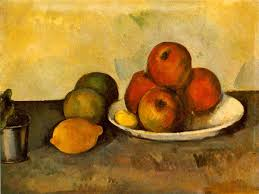
Painting is probably the most straightforward example. Every painting is in some way a representation – ie a model – of some aspect of reality. Since the earliest cave drawings, humans have felt compelled to represent objects, ideas and emotions in order to communicate with, entertain or inspire other humans. Note in passing that there is an element of communicating in a way which cannot be achieved by language alone. Over the years we have developed various techniques involving perspective, lighting, colour and so on to represent not just things or landscapes but also feelings, emotions and religious experiences. More recently with movements such as abstract expressionism or post modernism the representational aspect of visual arts is more subtle with an increasing self-referential element – a fascination with the modelling process itself and the medium or substrate underlying the model.
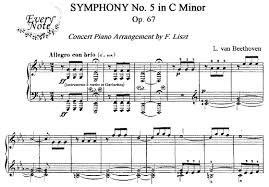
Music is about modelling in this more subtle form. I would claim that all music reflects in some sense the process of the mental model running in our brains, in the same way that a program runs on a computer. An important aspect of consciousness is the time dimension. Our self-model, and indeed our model of the universe including ourselves, is not a static representation but a continuous, coherent and dynamic simulation which extends from the past, through the present, and into the future. Like a computer program it “runs”, constantly looping back into the past to access memories or looping into the future to perform “what-if” subroutines, remembering, planning, reflecting, anticipating, always in the context of appropriate emotions and drives – the affective and conative aspects of experience. Music reflects this process, using a sequence of notes extending through time and devices such as pitch, tonality, rhythm, repetition, to “tell a story” or “paint a picture” or otherwise communicate in a specifically musical way some aspects of a person’s conscious experience to another conscious being.
Literature, and storytelling in general, is all about language and narrative, which as we noted in an early blog, are absolutely congruent with Model Theory. We can regard language as reflecting the model’s logic, and narrative as a direct representation of the model in action, telling a story about a particular situation in a particular world with particular characters which unfolds through time. This, I suggest, is directly analogous to the process by which we make sense of and interact with the world, through remembering what’s happened, anticipating what might happen, drawing conclusions, learning, regretting, hoping, once again with a background of appropriate emotions and feelings. Interestingly, if we are engrossed in a really good book – a “rattling good yarn” – we “lose ourselves” and become “immersed” in the story. What’s happening here, I suggest, is that our mental model is being driven entirely by the story – we largely lose consciousness of the “real” world and indeed of ourselves.
Poetry introduces the important notion of metaphor. For a masterful discussion of the role of metaphor in poetry I’d recommend William Empson’s classic, “Seven Types of Ambiguity”. If I remember correctly, he describes the haunting phrase in Shakespeare’s sonnet on old age “bare ruin’d choirs, where late the sweet birds sang” as being a metaphor for trees in autumn, which is itself a metaphor for old age, which is also suggested by ruined buildings, which hints at the dissolution of the monasteries, which happened “lately” in Shakespeare’s time, with a pun/metaphor on “late” as in the evening when the birds/choirboys sang in the evening, which brings us back to old age again. In other words, the phrase appeals to us because it uses metaphors to trigger several related but slightly different meanings which add up to a very rich, complex and emotionally satisfying communication. But what is a metaphor, ultimately, but a model – a process of expressing something in terms of something else. As such metaphor is central to language and the way we think, communicate and understand the world, as has long been recognised by psychologists and philosophers. More specifically, metaphor is absolutely central to Model Theory. Not only can our mental model itself be regarded as one gigantic metaphor for the world, but within the model, metaphor is clearly a pervasive and powerful tool for modelling cognitive phenomena, particularly more complex concepts and experiences.

So, representation, process, narrative and metaphor: all key components of works of art (without a capital A) to a greater or lesser extent, alone or in combination. And all central to Model Theory. Not exactly a proof, I’ll admit, but perhaps a smoking gun?
 consciousnessandstuff
2 comments