I’ve recently read three excellent new books which address the subject of consciousness from different but very interesting perspectives. All three share an account of the biological basis of mind that is quite similar to the one advanced in this blog (which is encouraging; remember, you read it here first!). But none then make the bold leap to explaining consciousness in terms of my “model within a model” idea. So in this post I revisit and expand on the idea in the context of what I’ve learnt from these books.

“Metazoa: Animal Minds and the Birth of Consciousness” by Peter Godfrey-Smith, is a fascinating account of the minds of non-human minds such as Cephalopods (squid and octopus) and Crustacea. I’m now convinced that such animals are conscious, albeit in a way which is very different from us. It seems that consciousness has evolved independently at least three times in creatures with a sufficiently complex nervous system. In each case, Godfrey-Smith sees this as a natural step in the evolution of life, in order to give organisms a better chance of survival. And the key to this is mental models, not just of the here-and-now external world, but also what he calls “offline modelling”, using a huge range of inputs from inside as well as outside the organism, from the past and the future as well as the present, to build what he calls an “experiental profile” Here’s a significant quote: “Offline modelling is useful; a tool with practical importance in working out what to do. It also gives human experience much of its feel“.
Godfrey-Smith isn’t particularly interested in the hard problem, but he clearly doesn’t expect it to be solved soon. In his last chapter he comes out strongly against the idea of computers ever being conscious, not least because he can’t see computers ever simulating what he calls the “rhythms and fields” which characterise the electrical activity of the brain. In this I disagree; I see the rhythms and fields as ultimately reflecting the model-based information processing which I believe underpins consciousness, and in principle, I don’t see why this couldn’t run on a computer just as well as on a living brain.
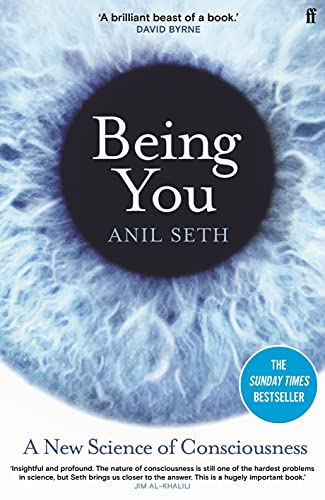
Anil Seth’s “Being You: a New Science of Consciousness” is an excellent account of how far we can explain consciousness in terms of the latest neuroscience research. At the same time as reading this, I also read “The 30 Second Brain”, edited by Seth, also excellent as a comprehensive and very accessible guide to neuroscience. I first came across Seth in 2013 and he now leads what sounds like an exciting team researching neuroscience and consciousness at the University of Sussex.
Seth’s understanding of mind is very similar to the one developed in this blog (no wonder I rate him!). He quite clearly views perception as an active, action-oriented construction (what I would call a model) and regards the self as itself a perception (a “controlled hallucination”). And like me he sets great store in the idea of a continual testing of hypotheses about the outside and inside world against inputs, not just sensory but also proprioceptive and interoceptive (the brain as a “prediction machine”). Like Godfrey-Smith, he sees consciousness as evolving naturally out of life, driven by the will to stay alive (the “beast machine”), and foresees a “dissolving” of the hard problem as we develop better and better understanding of the easy problems. But unlike me, he doesn’t appear to attach much significance to the idea of a sub-model of the self interacting with the wider “model of everything” as being the crucial key to such dissolution.
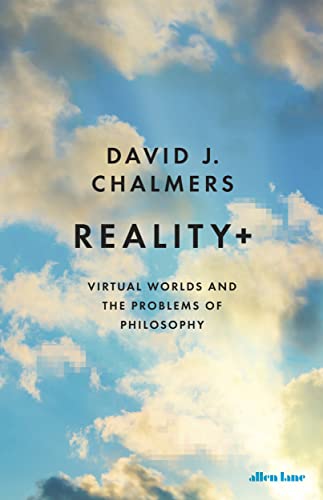
Finally, our old friend David Chalmers has just published a really groundbreaking new work called “Reality +“. This is a book about Virtual Worlds – immersive, interactive, computer-generated spaces – although it also covers more or less the whole of philosophy (and is worth reading for this alone). Chalmers argues convincingly that virtual worlds are real, that life within them can be meaningful, even that we may already be living in one – Matrix-style! Implicit in all this is the idea that minds, with or without consciousness, are information systems running on neuronal networks in the same way that a simulation runs on a computer – in other words the central thesis of this blog. So I expected a claim that the hard problem had been solved. But then in Chapter 5, on Mind, we get this:
“Why is there consciousness in the universe? How do physical processes give rise to consciousness? How can there be subjective experience in an objective world? Right now, no-one knows the answers to these questions.” [My italics].
Well, there’s a challenge! Time to wheel out my Model Theory once again! Here it is in a nutshell:

As illustrated above, the brain interacts with the outside world and inside world (body) through well understood physiological mechanisms. I understand the mind to be a very complex information system which models the world (outside and inside) via a neuronal network in the same sort of way that complex simulation software runs on computer hardware. So mind is entirely information, or if you like, information processing. An important part of the mind model (in humans at least) is a model of the self which has evolved for clear survival values. Consciousness is an emergent property of the mind model which arises from the recursive interaction of the self model with the model as a whole.
Of course the phrase “recursive interaction” begs a lot of questions and may itself comprise of a host of complex processes. The best metaphor I have for what’s going on is the much derided homunculus or “little man”, corresponding to the self model, who “observes” the model as a whole and is “observed” in turn by itself. This is, actually, what it feels like to be me, and in a sense, how could it not result in subjective experience? I’ve been convinced by J W Dunne that we shouldn’t be afraid of infinite regresses and that it is only in terms of the second term of a regress that we can understand the phenomenon under investigation – in this case self awareness (which I consider to be a crucial and necessary condition for consciousness). In any case the important point is that it is complex information, or information flows, which form the basis of consciousness, conceived of as a process rather than a thing.
It’s also worth pointing out that our understanding of complex systems in general is in many ways incomplete, although some important principles are emerging. One is that complex systems sometimes behave in surprising, unpredictable ways (eg the beating of a butterfly’s wings results in a hurricane on the other side of the world). A related principle is that a complex system may have emergent properties which are very difficult to predict from a knowledge of the elemental parts of the system. I regard consciousness in these terms. One way I find useful in trying to make sense of complex systems is in terms of hierarchies of “infrastructure”, supporting evolving “applications”, which then form a new layer of infrastructure supporting a new generation of applications, and so on. This tends to be the way I understand computer systems, for example (hardware supports operating system supports programs supports applications) or the internet (telephone infrastructure evolves into a data network which evolves into the internet which supports the web, email, social media etc). It could be that consciousness in this sense is a relatively recently evolved “application” running on the self model infrastructure which in turn runs on the mind model which runs on the nervous system which runs on the body, and so on (another infinite regression?). This might be another way to understand the recursive interactions and complex information flows referred to above. The important point is that we don’t need to know how a complex system such as the mind works down to the last detail in order to have a pretty good idea of what’s going on.
Whatever the fine detail, I’m convinced all this takes place in the physical universe, subject to the laws of physics, so we have no need for Cartesian Dualism, or God, or Chalmers’ “new fundamental properties in nature”. Admittedly, our understanding of the nature and properties of information is still rather sketchy, but I can’t imagine that anyone would claim that information was not part of the physical world. In fact, as discussed in the previous post, it may very well turn out to be that the physical world is itself based on information, in an “its from bits” formulation, which is in many ways a simpler, cleaner paradigm for phenomenology. Interestingly, if I understand him, Chalmers is actually quite sympathetic to this view.
So, let’s try answering Chalmers’ questions:
- Why is there consciousness in the universe? This is easy. It has survival value. I’m entirely in agreement with Godfrey-Smith and Seth that consciousness is a natural evolutionary step forward in the story of life, which explains why humans rule the world, to put it bluntly, but also, in a lesser form, gives vertebrates and many other species a huge advantage in life.
- How do physical processes give rise to consciousness? Through complex information processes running on a neuronal network analogous to a computer simulation, according to principles such as those just described. No massive problems there!
- How can there be subjective experience in an objective world? This is the tricky one. My answer is “it’s just information” but I admit “just” is doing a lot of work here. This brings us back to the vexed question of qualia, which I also described as “just information” in an earlier post. So, why is there something it is like to see red? Well, first of all, I disagree with Chalmers when he states that “these states (eg seeing red) don’t require an inner voice or reflective awareness of oneself”. I think they do. For me, what it is like to see red involves a huge variety and richness of information which almost by definition involves the self model. Seeing red, to me, goes far beyond just reacting to light of a particular wavelength and is associated with all sorts of associations, feelings, memories, predictions, and so on, to do with, for example, blood, danger, fire, traffic lights, London buses, and much more, depending on the circumstances. These elements are then combined and interact in a highly complex manner. If anything this applies even more so to other types of qualia such as an evocative perfume, or a feeling of rage (“seeing red” ha ha!) or lust for a particular individual. In all cases it is the complex recursive interaction of the self model with the model of the qualia which gives rise to the complex information process of subjective experience.
So there you have it. To borrow Chalmers’ own phrase “if I squint a little”, then in my humble opinion I think I’ve cracked the hard problem! Others may disagree.
Putting it a little less strongly, I believe to my own satisfaction that the Model Theory expounded in this blog, combined with insights from researchers such as Anil Seth and Peter Godfrey-Smith, amounts to a rough, embryonic but plausible science of consciousness which leaves me no longer surprised or baffled by the phenomenon. Certainly there is a long way to go. For example there is an intriguing link between, information, entropy, life and consciousness which I feel sure could be elaborated. I have a hazy idea of mind as being the latest evolutionary stage in a cosmic struggle to increase information, reduce entropy and resist the “red death” which the Second Law of Thermodynamics would otherwise condemn us to. But that’s a subject for a later post. In the meantime, I believe I can at least see a way through to solving the hard problem! And I still maintain that the proof will be in the form of a conscious computer which I predict we will see sooner rather than later. Watch this space!
 consciousnessandstuff